Many dogs can learn to enjoy paddleboarding, but breed alone does not determine whether a dog will be a safe and comfortable paddling companion. Temperament, health, swimming ability, obedience, size, balance, and willingness to remain calm on the board matter more than pedigree.
Some breeds commonly have traits that can make water activities easier, including trainability, confidence around water, and strong swimming ability. The eight breeds below are examples—not guarantees. Any dog should be introduced gradually, wear a properly fitted canine life jacket, and be allowed to leave the activity if it shows fear or distress.
Table of Contents
Best Dog Breeds for Paddleboarding
1. Golden Retriever: Golden retrievers have a natural inclination toward water and the outdoors. Their gentle and friendly temperament makes them excellent paddleboarding companions.
2. Labrador retriever: Similar to golden retrievers, Labradors have a friendly and outgoing nature that makes them ideal partners for any outdoor adventure. They also naturally love water and are strong swimmers, which is an ideal combination for paddleboarding.
3. Australian Shepherd: Australian shepherds are intelligent, athletic, and highly trainable. Those traits can help with learning board-specific commands, but their energy and sensitivity to movement may require extra impulse-control training before going onto the water.
4. Newfoundland: Newfoundlands are powerful swimmers and are often comfortable around water. Their large size and weight, however, require a wide, high-capacity paddleboard and an experienced paddler. A large dog moving suddenly can reduce stability rather than improve it.
5. Portuguese Water Dog: Portuguese water dogs were developed for work around water and are typically athletic, intelligent, and capable swimmers. Their trainability can make them suitable paddling companions, although each dog still needs gradual exposure and safety training. No breed is completely hypoallergenic.
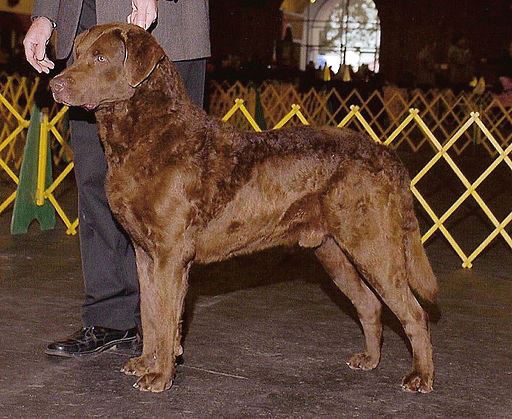
6. Chesapeake Bay Retriever: These retrievers (called “Chessies“) are also strong swimmers. What’s more, they have double-layered, water-repellent coats that act similarly to a duck’s feathers. They even have webbed feet for swimming after downed prey.
7. Irish Water Spaniel: Similarly to chessies, Irish water spaniels have a double, water-repellent coat and they love to swim. This makes them another ideal choice as a paddleboarding companion.
8. American Water Spaniel: American water spaniels are excellent swimmers and love the water. Their compactness makes them easy to manage on a paddleboard.
9. Chihuahua: Chihuahuas can make excellent paddleboarding companions when they are calm, confident, and gradually trained. Their compact size adds relatively little weight to the board and makes them easier to assist during reboarding. Because small dogs can tire or become chilled quickly, they still need a properly fitted life jacket, protection from excessive sun or cold, and short introductory outings.
These are some of the best dog breeds for paddleboarding.
When thinking of dog breeds that are good swimmers, also consider the individual dog’s size, temperament and complacency with water. Some dog breeds may not have a natural affinity with water or may be nervous about being on a paddleboard. It’s advisable to introduce your dog to water and paddleboarding gradually; this would ensure a positive experience for you and your canine companion.
Preparing Your Dog for Paddleboarding
Although taking your dog paddleboarding with you can be a good bonding experience, an over-excited canine can sometimes end up in cold water. Here are some tips that can help prevent your dog from jumping off the board:
- Do dry land training first. Before hitting the water with your dog, work on some obedience training and teach him some basic commands to help him understand how to behave when he’s on the paddleboard.
- Introduce your dog to the water gradually. Start by playing near the water, then gradually encourage him to get onto the paddleboard while it’s still on the shore.
- Use treats and praise to reward calm behaviour. If your dog quietly obeys orders to sit or stand while he’s on the board, make it clear to him that he’s doing a great job.
- Use consistent commands. Devise a set of commands you’ll use specifically for paddleboarding, such as “stay”, “sit” or “down”. Use these commands consistently to manage your dog’s actions on the board.
- Control his excitement. If your dog becomes overly excited, practise calming exercises. Ask him to lie down or sit, then reward him for that calmer behaviour.
- Avoid excessive stimulation. Choose quiet paddling locations to prevent your dog from becoming over-stimulated by distractions such as aquatic creatures, birds or other dogs.
- Employ safety gear. Ensure that your dog is wearing a well-fitting life jacket. It could reduce the urge for him to jump into the water and make you both feel more secure.
- Stay calm yourself. Dogs often reflect their owners’ emotions. Your dog will be more likely to follow suit if you stay calm and collected.
- Take regular breaks. During your paddleboarding session, take breaks to allow your dog to relax and release any built-up excitement.
- Respond to signs of stress. Do not ignore trembling, repeated attempts to leave the board, tucked posture, frantic movement, or other signs of fear. Return to shore or shallow water, give the dog a break, and resume training another day at an easier level.
Make the effort to prepare your dog for paddleboarding. With time, you’ll find that your patience and consistency have paid off.
When Your Dog Falls Off a Paddleboard
Despite any precautions you may take, your canine paddleboarding partner could still take an unexpected plunge into the water. Being prepared for such an event is part of responsible paddleboarding with pets.
Here’s what you can do if your dog falls off your paddleboard:
1. Remain calm. Your dog will look to you for signs so you must stay calm. If you stress, your dog may follow suit, making it more difficult to get him back onto the board.
2. Reassure your dog. Speak to your dog in a gentle and reassuring voice. Let him know that he’s OK and that you’re there to help.
3. Use his life jacket handle. Most pet life jackets have a handle on the back. Calmly direct your dog to the side of the paddleboard and use the handle to help him back on board.
4. Train your dog for re-boarding. Training your dog to re-board the paddleboard can facilitate the process if he happens to fall off. You can practise this in shallow water before you head out to deeper water.
5. Check for injuries. Once your dog is safely back on the board, check him for any injuries. Even if he seems fine, it’s good to ensure that he hasn’t been hurt during the fall.
6. Take a break. Once you’ve rescued your dog and all is well, take a short break to allow both of you to settle down after the excitement.
7. Evaluate what happened. Try to figure out what caused your dog to fall off. Was it a balance issue, excitement or something else? Understanding the cause can help prevent a re-occurrence.
8. Decide whether to stop. If the dog is cold, tired, frightened, injured, or reluctant to reboard, end the outing and return to shore. Continuing is appropriate only when the dog is calm, comfortable, and willingly resumes the activity.
Tips to Ensure Your Dog’s Stability on the Paddleboard
- Board size: Your paddleboard should be stable and wide enough to accommodate both you and your dog comfortably. A board that is at least 32 inches wide and 10 feet long is recommended for stability.
- Traction pads: Having traction pads on your paddleboard can give your dog a better grip and prevent him from slipping. Consider fitting them if your board doesn’t have any. Glide’s Angler and Retro paddleboard models are popular with pet owners, as they have excellent traction.
- Keep your dog centred. Encourage your dog to stay in the centre of the board where it’s most stable. Avoid having him stand too close to the edges.
Following these tips could help to minimize the chances of your dog falling off the paddleboard. Because every dog is different, tailor your approach to suit your dog’s abilities and personality. With practice and patience, paddleboarding together can become a mutually enjoyable pastime.
Pin this image on Pinterest: